Operate the argument
Instruments
Each answers one question: you set the conditions, it computes, and it says where its number came from. Each is a model, labelled as one, never a recording of nature.
19 of them also have a recorded walkthrough: where to start, what to change, in what order, and the numbers to expect.
Light quanta
Whether light gives up its energy in whole pieces, and what the wave description keeps when it does.
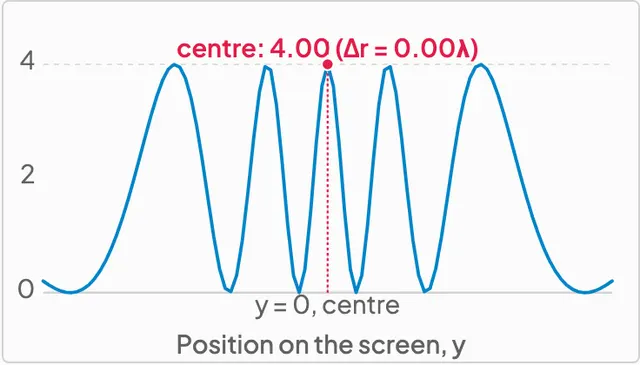 Continuous waves explain purely optical phenomena.
What does a continuous wave description of light explain well, and what exactly does its intensity measure?
- Give every resonator its share, and the total never stops growing.
If every resonator gets the same mean energy whatever its frequency, how much energy does the radiation hold, and does the total ever stop growing?
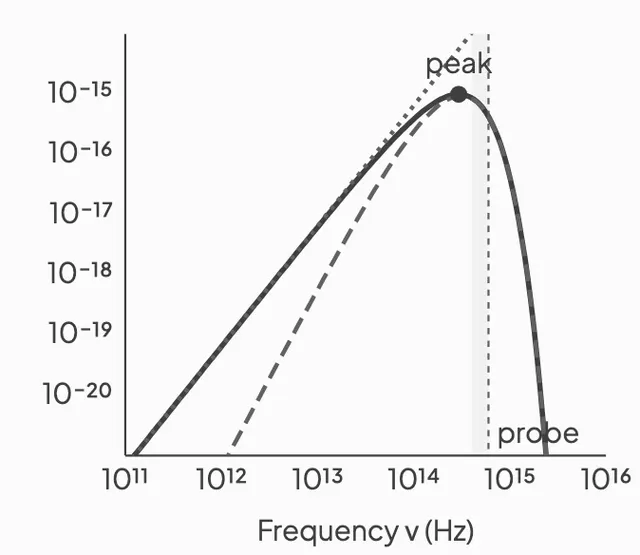 Where Wien's law holds, and where it stops.
What does a measured radiation spectrum look like at a given temperature, in which regime is Wien's law or the classical law an accurate description, and what does a density plot actually measure?
- A spectrum has an entropy. Compressing it costs the same way a gas does.
Within the regime where Wien's law holds, how does the entropy of monochromatic radiation depend on the volume it occupies, and what had to be fixed to get a definite answer?
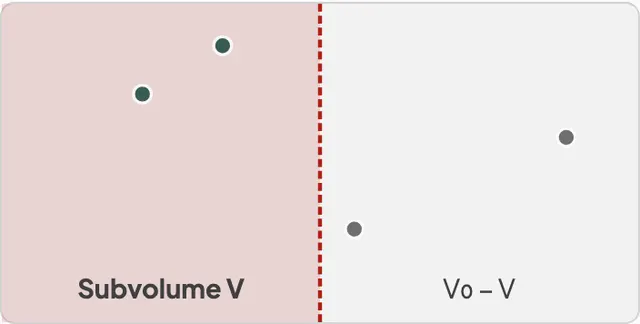 Independent configurations and the gas analogy
How does counting independent possibilities produce an entropy that depends on volume like n ln V, and what changes if the things are not independent?
Walkthroughs: Journey I Stage E: The Microstate Counter, The locked positions
- The radiation entropy law matches the gas entropy law.
Why does comparing the radiation entropy volume law to the ideal gas entropy volume law suggest that monochromatic radiation behaves as independent energy quanta of magnitude R*beta*nu / N = h*nu?
Walkthrough: The Move: From Entropy Law to Energy Quanta
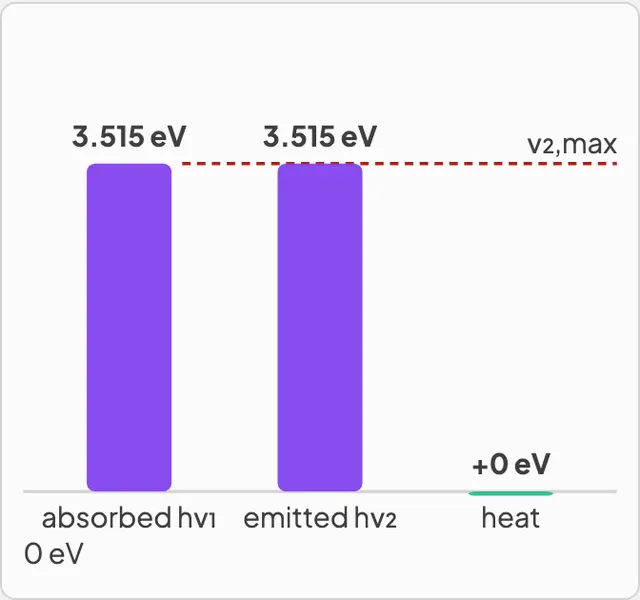 Stokes's rule and the single-quantum energy budget
Why can the frequency of emitted fluorescent light not exceed that of the exciting light under the light-quantum hypothesis, and what are the exact conditions for exceptions?
Walkthroughs: Journey I Stage G: The Fluorescence Energy Accounting, Stokes's Rule as an Energy Budget
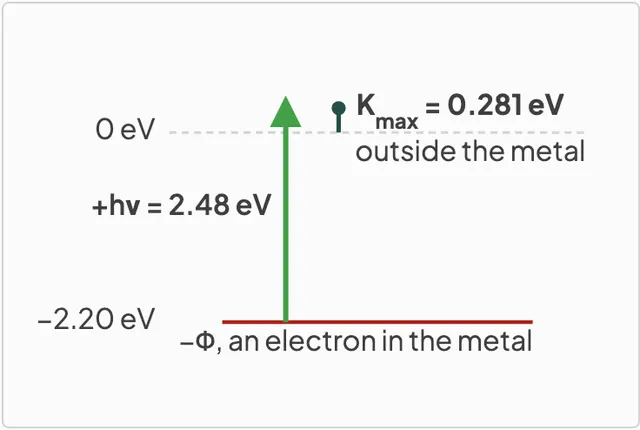 Brighter light, more electrons. Higher frequency, faster ones.
What changes the energy of the emitted electrons, and what changes their number?
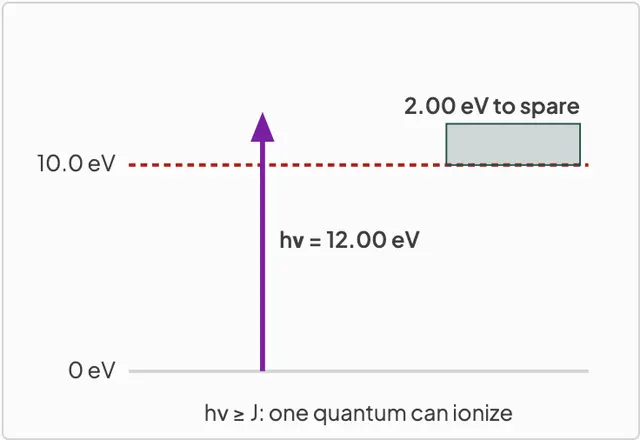 Threshold frequency sets the bound. Absorbed energy counts the ions.
How does single-quantum energy conservation set the frequency threshold for gas ionization, and what determines the relation between absorbed light energy and the count of ionized molecules?
Walkthrough: Gas Ionization Threshold and Single-Quantum Energy Conservation
Brownian motion
Whether a visible speck in still water is being shoved by molecules, and how far it should travel if it is.
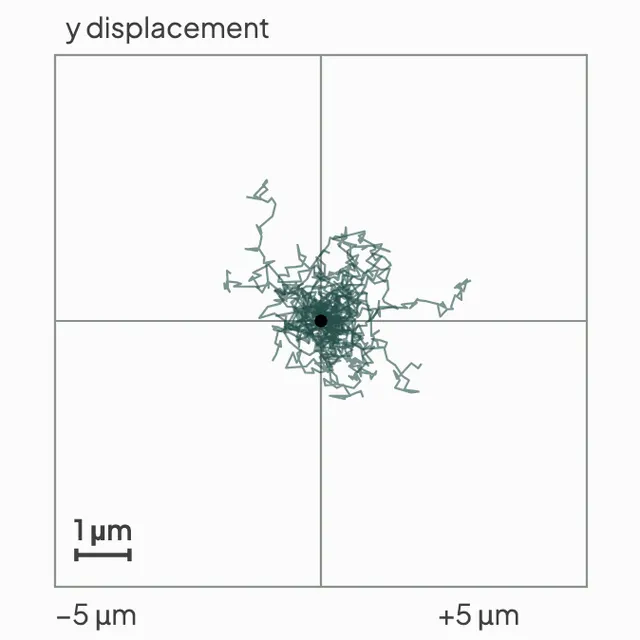 Tracer ensemble
When individual tracers wander unpredictably, which statistic of their displacements stays stable and grows lawfully with the observation interval?
Walkthrough: Einstein's 0.8 micron particle
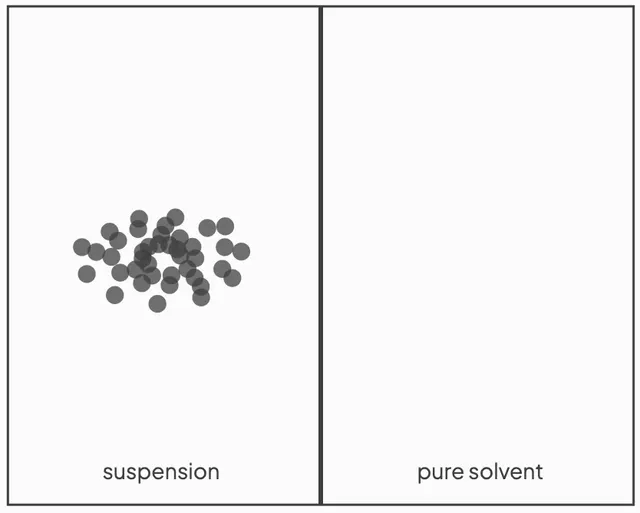 A particle you can see pushes like one you cannot.
Do suspended particles press on a partition the way dissolved molecules do, and does their size change the pressure at the same number per volume?
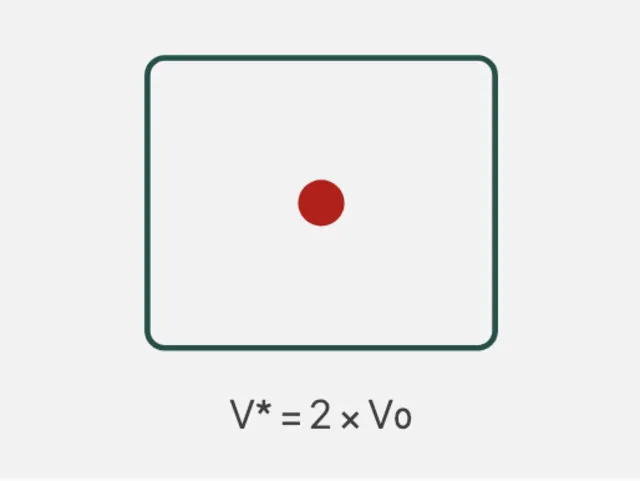 Why counting positions gives the pressure law.
How does counting where independent particles can be produce the pressure law without solving any motion?
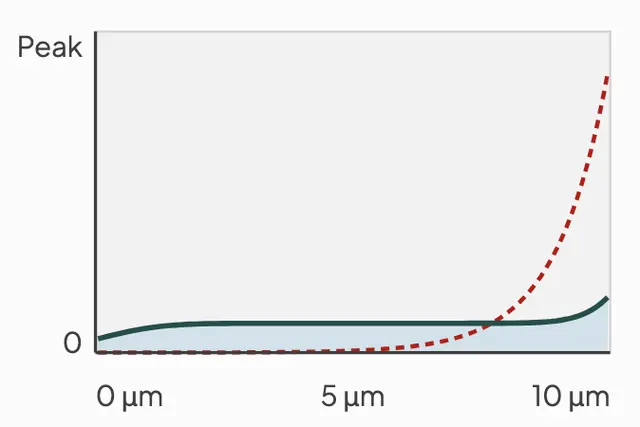 Balancing directional drag against random spreading.
How can drag and equilibrium determine how fast particles diffuse, and why does the force you apply not matter?
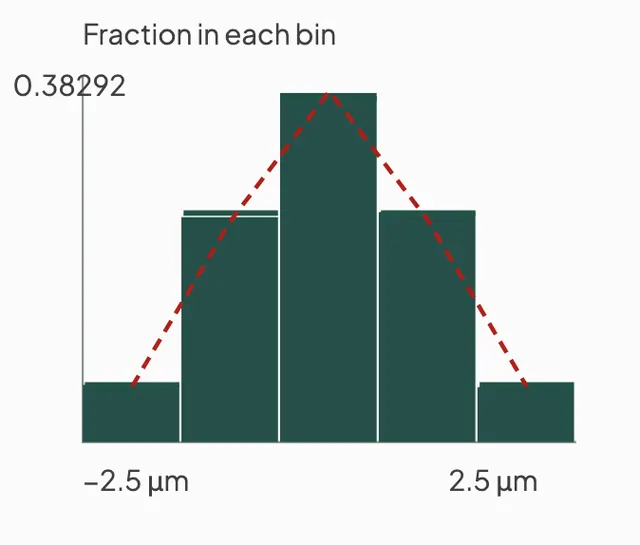 Random steps
How do many small independent random steps produce a deterministic spreading law, and what part of the step distribution sets the rate?
Walkthrough: coin to bell
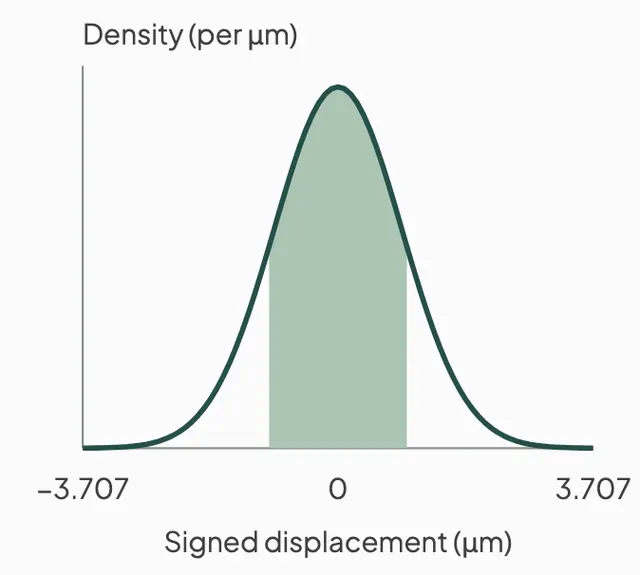 Spreading probability
Where is a diffusing tracer likely to be after a time t, and how does a probability density differ from a probability?
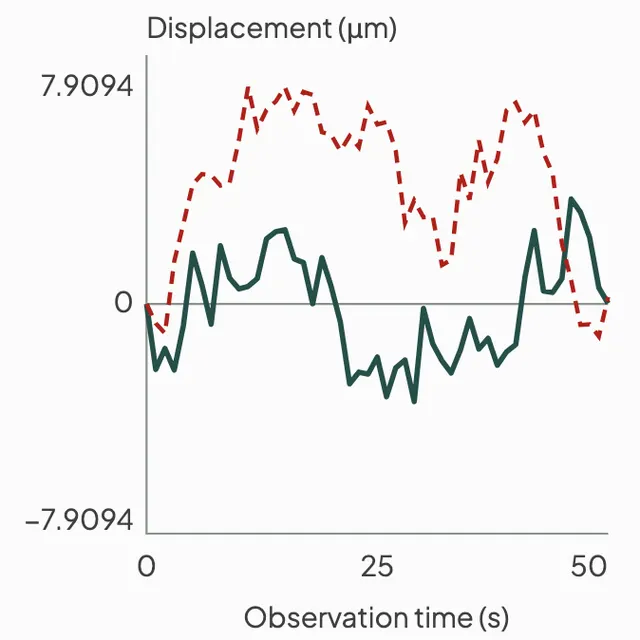 Molecular-number inference
What can measured displacements tell you about the number of molecules, and how sure can you be?
Walkthrough: Perrin's count
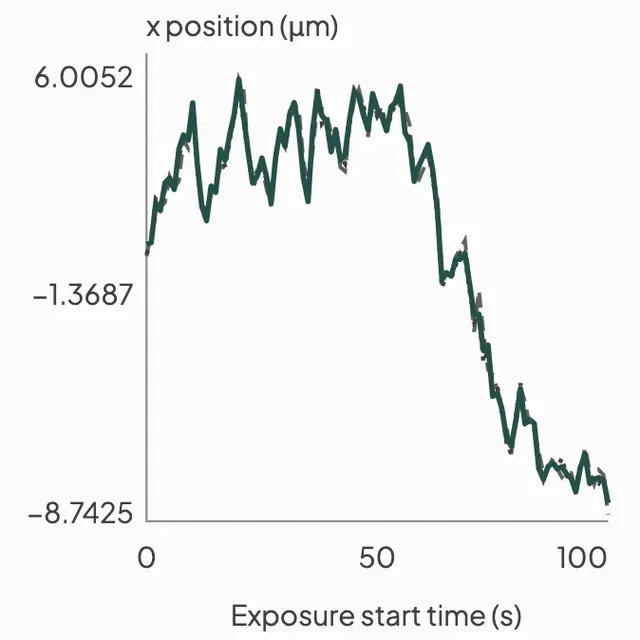 The particle. The camera. The estimate.
How do camera noise, exposure blur, and drift change what displacement data can tell you, and when does the simple interval stop being valid?
Walkthrough: Camera noise and exposure bias
Special relativity
What it takes to set two distant clocks, and what follows once you say precisely what that means.
- How do distant clocks agree on a time?
How can distant clocks acquire an operational common time, and do moving clocks share it?
- The same relative motion, two accounts of one current.
Why does moving the magnet instead of the conductor create an explanatory asymmetry, and how does the transformation remove it?
Walkthrough: magnet and conductor
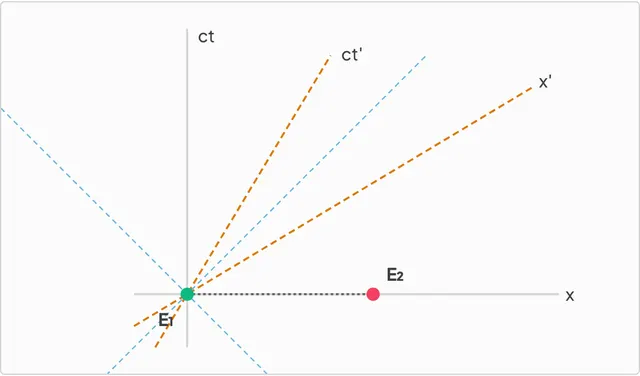 Simultaneity is relative; moving bodies contract.
How does relative motion affect the synchronization of clocks, the coordinate measurement of moving rods, and the invariant causal order of events?
Walkthrough: The boost to 0.6c
- Build the map, don't receive it.
What map between two inertial frames keeps both postulates, and what does each requirement decide?
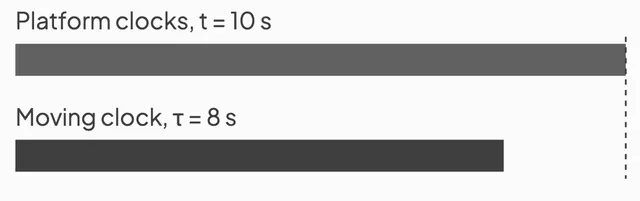 A moving clock loses time.
How much less time does a moving clock record than the clocks it passes, and does a clock that goes out and comes back show the difference when they meet again?
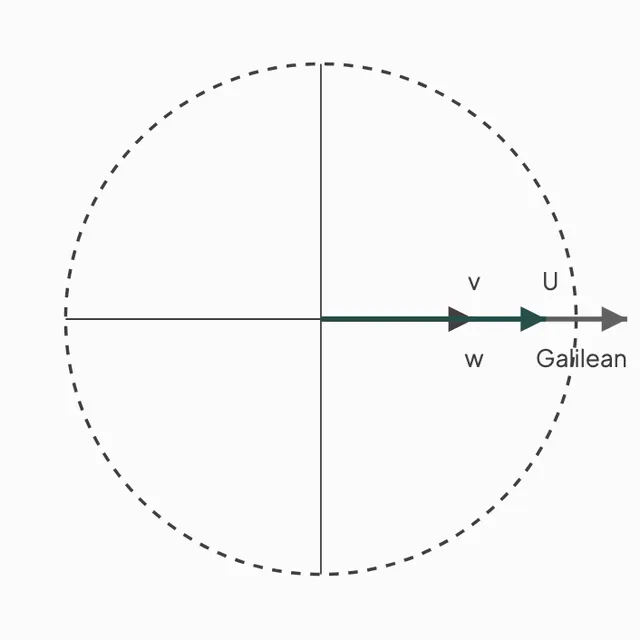 Speeds do not simply add.
Why doesn't adding speeds preserve light speed, and what happens when the motions are not along one line?
- The field equations keep their form.
How do the Maxwell-Hertz equations keep their form under the transformation, and what must the electric and magnetic fields do?
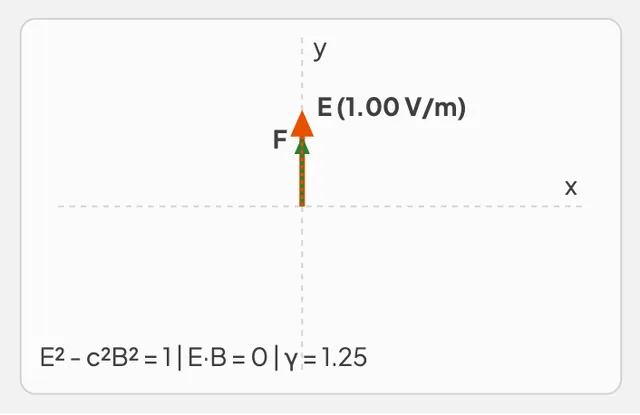 Fields transform together, not as separate realities.
How do electric and magnetic descriptions change together under a boost, and what does a test charge experience in each frame?
Walkthrough: field frame change
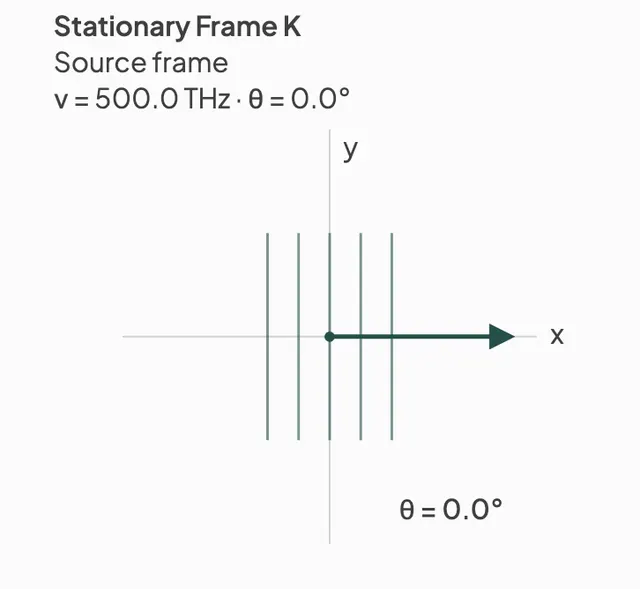 Frequency and direction transform together.
How do the frequency and propagation direction of light transform between frames?
Walkthrough: doppler aberration
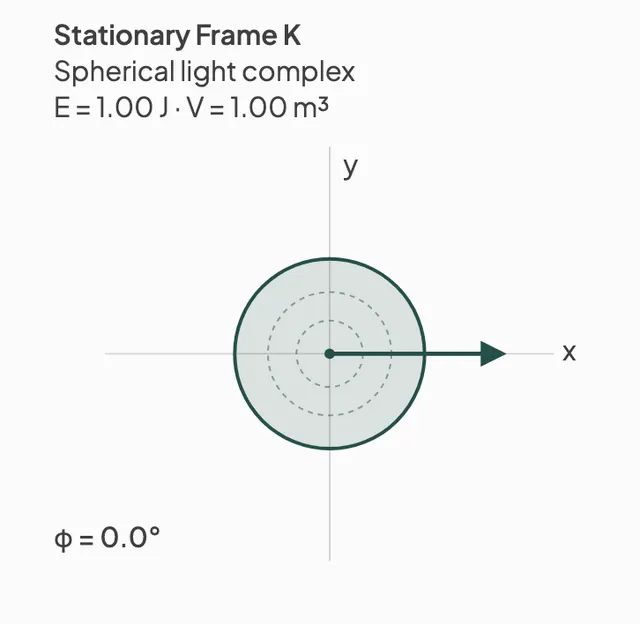 A packet of light does not transform like a rigid material body.
How do the energy and volume of a bounded light complex transform between frames?
Walkthrough: finite light complex
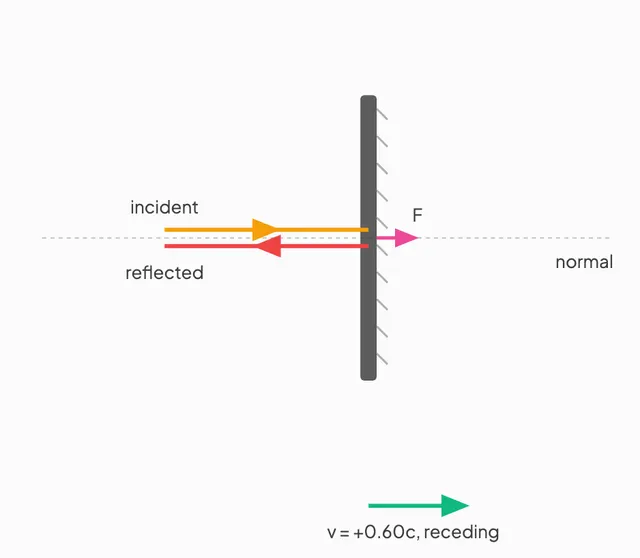 Moving mirror reflection, Doppler shift, and radiation pressure energy balance.
How do the frequency, angle, amplitude, and radiation pressure of light transform when reflected by a moving mirror, and how does energy balance between the light and the mirror's mechanical work?
Walkthrough: moving mirror reflection
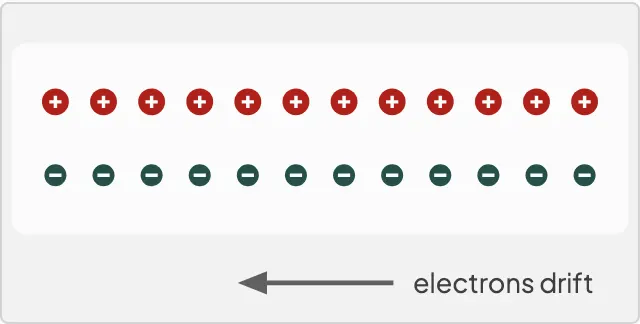 Charge density is frame-dependent, while total charge is invariant.
How do charge density and current density transform between inertial frames, and why is a neutral current-carrying wire charged in a moving frame?
Walkthrough: charge and current transformation
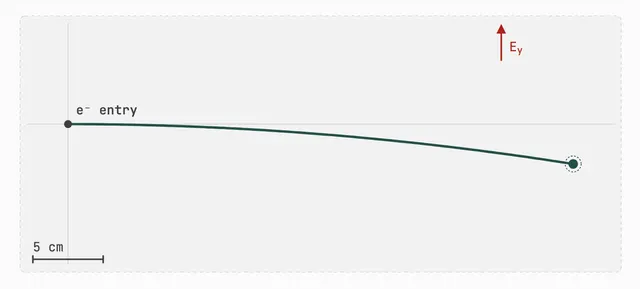 Force conventions and dynamics of the slowly accelerated electron.
What force, work, energy, and deflection relations follow for a slowly accelerated electron, and why do two different "transverse masses" appear?
Walkthrough: electron work and deflection
Before the coordinate map: optical model comparisons
Compare arm times, moving-water drag and wave equations. These explanatory previews use modern calibration; historical datasets and strict 1904 modes remain in preparation.
Mass and energy
What survives when one body's energy is written down twice and subtracted.
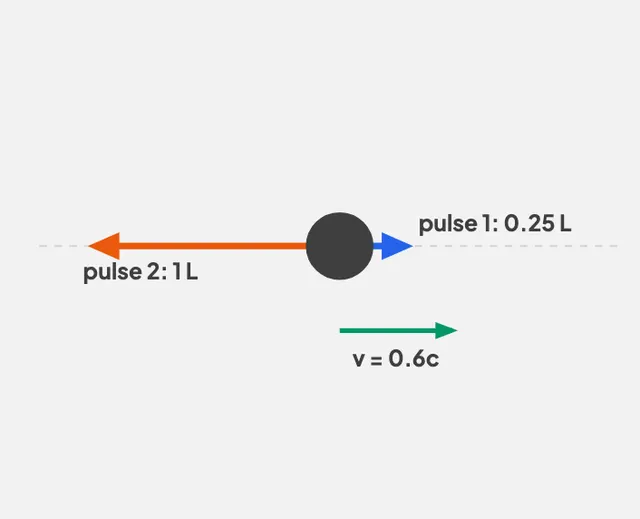 Opposite pulses and two energy ledgers.
If a body at rest emits two equal pulses in opposite directions, what do two observers' energy ledgers force you to say about the body?
Walkthrough: the two pulses
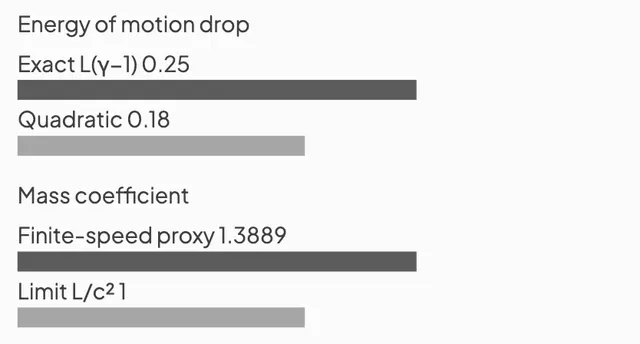 A smaller energy of motion at the same speed.
What does a smaller energy of motion at the same speed tell you about the body's inertia, and why does the conclusion come from low speeds?
Walkthrough: toward low speed
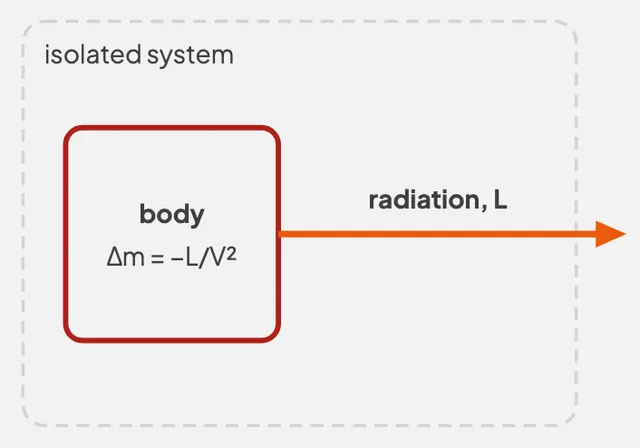 System boundaries and the energy ledger.
When energy leaves a body, which system loses mass, and which does not?
Walkthroughs: the 1906 box, where the energy went
Across more than one paper
These reach across the papers rather than serving one argument, so a reader arriving from any of them is in the right place.
In preparation
Listed so the gap between what the edition plans and what it has finished stays visible. What is missing here is the record rather than the page: an instrument of the edition declares in its own manifest the question it answers, who computes its numbers, and what it does not model, and this one has no manifest yet. You can open it and operate it. The edition does not yet stand behind its numbers.
- Three routes toward a molecular number. (a preview page exists)